SEAFDECINSTITUTIONAL REPOSITORY
    • English
    • ไทย
    • 日本語
    • Bahasa Indonesia
    • Bahasa Melayu
    • Burmese
    • Filipino
    • Khmer
    • Lao
    • Tiếng Việt
  • Filipino 
    • English
    • ไทย
    • 日本語
    • Bahasa Indonesia
    • Bahasa Melayu
    • Burmese
    • Filipino
    • Khmer
    • Lao
    • Tiếng Việt
  • Mag log in
Tingnan ang Item 
  •   DSpace Home
  • 04 SEAFDEC Secretariat Publications
  • 02 Technical Publications and Reports on Aquaculture
  • Handbook on Community-based Aquaculture for Remote Rural Areas of Southeast Asia
  • Tingnan ang Item
  •   DSpace Home
  • 04 SEAFDEC Secretariat Publications
  • 02 Technical Publications and Reports on Aquaculture
  • Handbook on Community-based Aquaculture for Remote Rural Areas of Southeast Asia
  • Tingnan ang Item
JavaScript is disabled for your browser. Some features of this site may not work without it.

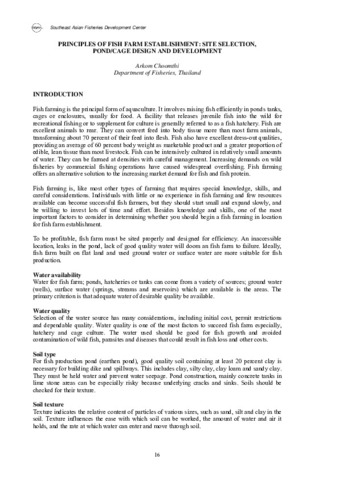
Principles of fish farm establishment: Site selection, pond/cage design and development
Thumbnail
Tingnan/Open
PDF Preview
ChoomthiA2008.pdf (879.8Kb)
Downloads: 2,035
Petsa
2008
May-akda
Choomthi, Arkom
Page views
1,501
Metadata
Ipakita ang buong tala ng item

Share 
 
Abstract
Fish farming is the principal form of aquaculture. It involves raising fish efficiently in ponds tanks, cages or enclosures, usually for food. A facility that releases juvenile fish into the wild for recreational fishing or to supplement for culture is generally referred to as a fish hatchery. Fish are excellent animals to rear. They can convert feed into body tissue more than most farm animals, transforming about 70 percent of their feed into flesh. Fish also have excellent dress-out qualities, providing an average of 60 percent body weight as marketable product and a greater proportion of edible, lean tissue than most livestock. Fish can be intensively cultured in relatively small amounts of water. They can be farmed at densities with careful management. Increasing demands on wild fisheries by commercial fishing operations have caused widespread overfishing. Fish farming offers an alternative solution to the increasing market demand for fish and fish protein. [Extract]
URI
http://hdl.handle.net/20.500.12066/4645
Suggested Citation
Choomthi, A. (2008). Principles of fish farm establishment: Site selection, pond/cage design and development. In Handbook on Community-based Aquaculture for Remote Rural Areas of Southeast Asia (pp. 16-25). Bangkok, Thailand: Secretariat, Southeast Asian Fisheries Development Center.
Paksa
fish culture ASFA; aquaculture ASFA; site selection ASFA; pond construction ASFA; ponds ASFA; water quality ASFA; soil ASFA; water supply ASFA; breeding stock ASFA; breeding sites ASFA; juveniles ASFA; sustainability ASFA; sustainable fishing ASFA; pond culture ASFA; cage culture ASFA; South East Asia; cages AGROVOC; hatcheries AGROVOC
Mga koleksyon
  • Handbook on Community-based Aquaculture for Remote Rural Areas of Southeast Asia [14]

Related items

Showing items related by title, author, creator and subject.

  • Thumbnail

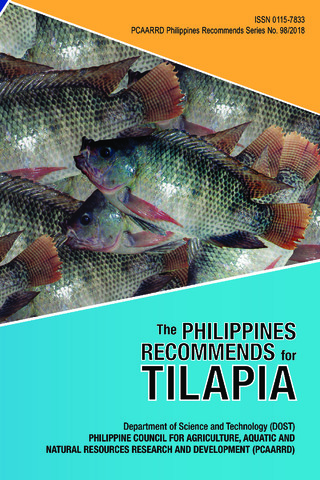
    The Philippines recommends for tilapia 

    The Tilapia Technical Committee 2017 (DOST-PCAARRD, 2018)
    Tilapia is one of the most commercially important commodities in fisheries and aquaculture. Although tilapia is relatively easy to propagate and culture, the Philippine tilapia industry needs the necessary boost in the ...
  • Thumbnail

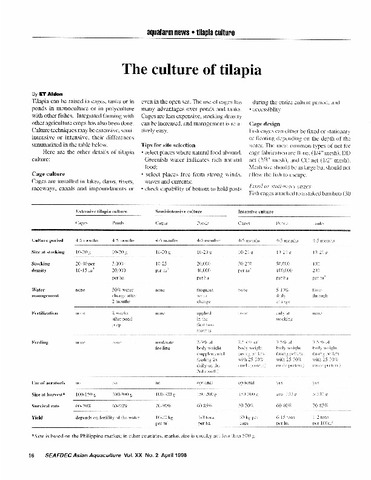
    The culture of tilapia 

    Aldon, Eva T. (Aquaculture Department, Southeast Asian Fisheries Development Center, 1998)
  • Thumbnail

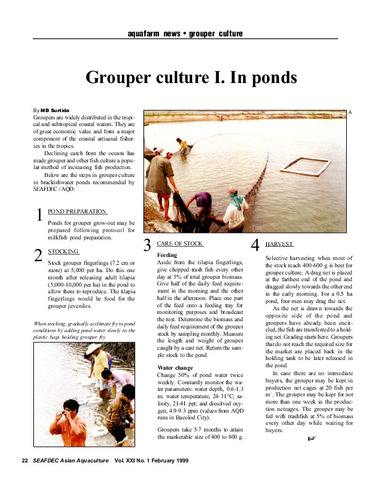
    Grouper culture 

    Surtida, Marilyn B. (Aquaculture Department, Southeast Asian Fisheries Development Center, 1999)
© SEAFDEC 2025
Makipag-ugnayan sa amin


Mag-browse

Lahat ng DSpaceMga Komunidad at KoleksyonAyon sa Petsa ng IsyuMga may-akdaMga pamagatMga paksaAng Koleksyon na itoAyon sa Petsa ng IsyuMga may-akdaMga pamagatMga paksa

Aking Account

Mag log in
Related Links
SEAFDEC/TD IRSEAFDEC/AQD IRSEAFDEC/MFRDMD IRSEAFDEC/IFRDMD IR

© SEAFDEC 2025
Makipag-ugnayan sa amin


DOWNLOAD