From Growth to Sustainability: the future of capture fisheries of Southeast Asia
Share
| dc.contributor.author | Matsuishi, Takashi Fritz | |
| dc.date.accessioned | 2025-06-26T02:06:18Z | |
| dc.date.available | 2025-06-26T02:06:18Z | |
| dc.date.issued | 2025-06 | |
| dc.identifier.uri | http://hdl.handle.net/20.500.12066/7611 | |
| dc.description.abstract | Southeast Asia, encompassing 11 tropical nations, has witnessed remarkable growth in its capture fisheries sector. Over the past three decades, capture fisheries production in the region has shown consistent growth, outpacing global trends. The proportion of fishers relative to the total population is 3.4 times higher than the global average, while the consumption of aquatic foods per capita is nearly double the world average. Although concerns over overfishing have been raised for many years, Southeast Asia still maintains a ratio of underfished marine stocks 3.6 times greater than the global average. This would be largely due to the dominance of artisanal and small-scale fisheries, combined with non-selective fishing practices and the region’s rich biodiversity. Nevertheless, the per capita availability of aquatic foods has recently reached a plateau. With the regional population projected to peak around 2055 at 113 % of its current size, the anticipated stabilization in demand for aquatic products presents an opportunity to shift toward more sustainable fisheries practices. | en |
| dc.language.iso | en | en |
| dc.publisher | Secretariat, Southeast Asian Fisheries Development Center | en |
| dc.title | From Growth to Sustainability: the future of capture fisheries of Southeast Asia | en |
| dc.type | Book chapter | en |
| dc.citation.spage | 39 | en |
| dc.citation.epage | 44 | en |
| dc.citation.bookTitle | Fish for the People Vol.23 No.1 | en |
| local.subject | capture fishery | en |
| local.subject | Southeast Asia | en |
| local.subject | sustainable fisheries | en |
| local.subject | overfishing | en |
| local.subject | fish stock assessment | en |
| local.subject | stock status | en |
Files in this item

รายการนี้ปรากฏใน (s)
รายการที่เกี่ยวข้อง
แสดงรายการที่เกี่ยวข้องตามชื่อผู้แต่งผู้สร้างและเรื่อง
-
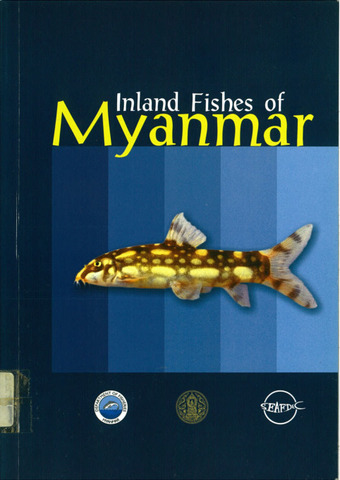
Inland fishes of Myanmar
(Secretariat, Southeast Asian Fisheries Development Center, 2005-12)This handbook of some inland fishes in Myanmar was based on a rapid field survey of SEAFDEC supported team and long term observation of the authors on common species and some taxa, obtained from the aquarium trade. We ...