Evolution of genome size within the genus Haliotis (Vetigastropoda: Haliotidae)
រកមើល / បើក
កាលបរិច្ឆេទ
2018Page views
779ទិន្នន័យមេតា
មើលកំណត់ត្រាលម្អិតនៃធាតុCited times in Scopus
Share
អរូបី
Genome size (C-value) and the percentage of adenine and thymine nucleotides in the genome (AT content) are fundamental characteristics of every species, and very important parameters in molecular cytogenetic and phylogenic studies, and for the progress of whole-genome sequencing. In this study, the C-value and AT content of nine abalone species inhabiting the Northwest Pacific (around Japan), Southeast Asia, South Africa, and Oceania were determined using flow cytometry. C-value ranged from 1.32 pg for Haliotis varia (Southeast Asia) to 2.01 pg for Haliotis laevigata (Oceania), and AT content ranged from 58.0% for Haliotis planata (Southeast Asia) to 66.3% for Haliotis diversicolor aquatilis (Southeast Asia). Reported chromosome numbers ranged from 2n = 32 to 36, and were higher in Oceanian, South African, and Northwest Pacific species (2n = 36) compared with the Southeast Asian group (2n = 32). This increase of chromosome number in the Oceanian species seems to be related to an increase in the DNA amount, unlike that of Haliotis midae (South African species). An increase of the C-value associated with an increase in DNA amount was also shown in the North Pacific group. These results suggest that increases in the DNA amount occurred independently in the ancestor of each of the different lineages.
Suggested Citation
Adachi, K., Arai, K., de la Peña, M. R., Moriyama, S., & Okumura, S.-I. (2018). Evolution of genome size within the genus Haliotis (Vetigastropoda: Haliotidae). Journal of Shellfish Research , 37(5), 1067-1072. https://doi.org/10.2983/035.037.0518
Taxonomic term
បណ្តុំបណ្តុំ
- AQD Journal Articles [1249]
Related items
Showing items related by title, author, creator and subject.
-
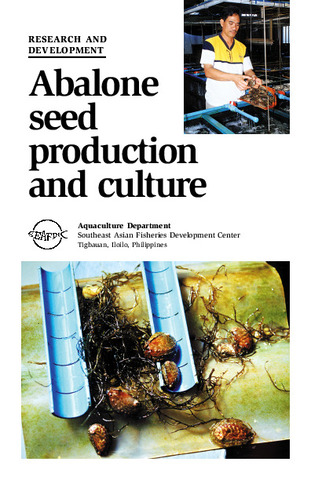
Abalone seed production and culture
(Aquaculture Department, Southeast Asian Fisheries Development Center, 2000)Details the research conducted at AQD for the tropical abalone Haliotis asinina. AQD has developed the rudiments of a hatchery protocol. -
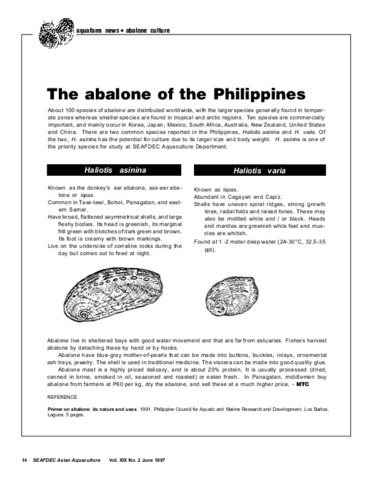
The abalone of the Philippines
(Aquaculture Department, Southeast Asian Fisheries Development Center, 1997) -
Aquaculture-based Enhancement and Restoration of Many-colored Abalone Resources (Haliotis diversicolor Reeve, 1846) in Bach Long VI National Marine Protected Area, Vietnam
(Training Department, Southeast Asian Fisheries Development Center, 2016)Many-colored abalone (Haliotis diversicolor) is high commercial species in Vietnam. Meanwhile, these resources have been over-exploited, thus, artificial breeding was implemented to restore natural abalone resources. After ...