SEAFDECINSTITUTIONAL REPOSITORY
    • English
    • ไทย
    • 日本語
    • Bahasa Indonesia
    • Bahasa Melayu
    • Burmese
    • Filipino
    • Khmer
    • Lao
    • Tiếng Việt
  • ไทย 
    • English
    • ไทย
    • 日本語
    • Bahasa Indonesia
    • Bahasa Melayu
    • Burmese
    • Filipino
    • Khmer
    • Lao
    • Tiếng Việt
  • เข้าสู่ระบบ
ดูรายการ 
  •   SIR บ้าน
  • 03 SEAFDEC External Publications
  • Journal Articles, Conference Papers and Book Chapters by SEAFDEC Staff
  • Conference Proceedings
  • AQD Conference Proceedings
  • ดูรายการ
  •   SIR บ้าน
  • 03 SEAFDEC External Publications
  • Journal Articles, Conference Papers and Book Chapters by SEAFDEC Staff
  • Conference Proceedings
  • AQD Conference Proceedings
  • ดูรายการ
JavaScript is disabled for your browser. Some features of this site may not work without it.

Pond liming and liming materials for brackishwater ponds

Thumbnail
URL ที่เชื่อมโยง
www.fao.org
วันที่
1986
ผู้เขียน
Subosa, P. F.
Page views
724
เมตาดาต้า
แสดงระเบียนรายการเต็ม

Share 
 
นามธรรม
Vital information aquaculturists need to know on lime are: (a) what lime to use; (b) why lime is used; (c) which form to apply; (d) how much to apply; and (e) when to apply.

Experiments on the use of lime in brackishwater ponds at SEAFDEC Leganes Research Station pointed out the need to apply lime at least once a year and the importance of determining the quality of the soil.

Application of 1–2 tons agricultural lime per hectare in extensive shrimp ponds was observed to be significantly effective in improving the pH and hastening the decomposition of organic matter in soil. Considerable water outflows from intensive and semi-intensive shrimp ponds made the lime ineffective. It was observed that liming showed no significant change in soil pH due to this water outflows.

Proper water and soil management plus lime can improve the pH of newly renovated or constructed ponds and peripheral canals.

To eradicate pests and predators, lime with ammonium sulfate is effective as a substitute for synthetic pesticides.
Description
Also in : Modern Fish Farming 1987. p.23-29.
URI
http://hdl.handle.net/10862/282
เรื่อง
pond culture ASFA; Lime AGROVOC; Liming of fish ponds; Philippines AGROVOC
คอลเลกชัน
  • AQD Conference Proceedings [298]

รายการที่เกี่ยวข้อง

แสดงรายการที่เกี่ยวข้องตามชื่อผู้แต่งผู้สร้างและเรื่อง

  • Thumbnail

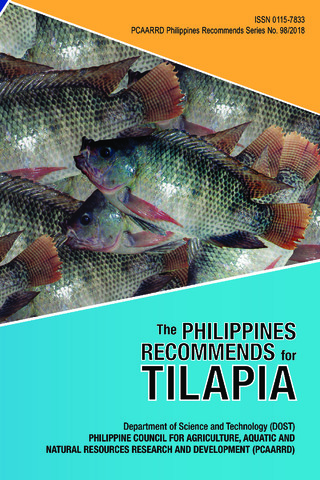
    The Philippines recommends for tilapia 

    The Tilapia Technical Committee 2017 (DOST-PCAARRD, 2018)
    Tilapia is one of the most commercially important commodities in fisheries and aquaculture. Although tilapia is relatively easy to propagate and culture, the Philippine tilapia industry needs the necessary boost in the ...
  • Thumbnail

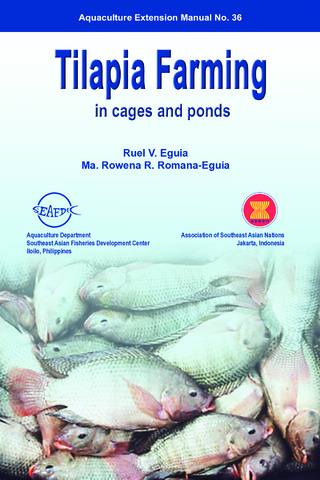
    Tilapia farming in cages and ponds 

    Eguia, Ruel V.; Romana-Eguia, Ma. Rowena R. (Aquaculture Department, Southeast Asian Fisheries Development Center, 2004)
    This 40-page manual describes the farming practices for tilapia in cages, pens, ponds, and tanks. Also details selection of quality seedstock, maintenance of stock (feeding, water management), and harvesting. A list of ...
  • Thumbnail

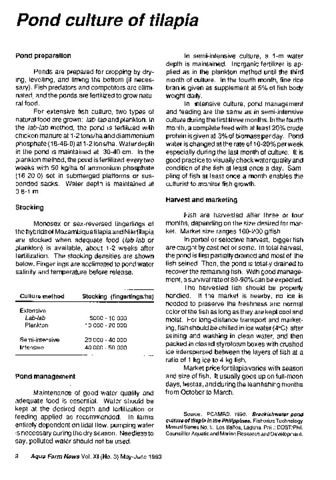
    Pond culture of tilapia 

    Castaños, Milagros T.; Southeast Asian Fisheries Development Center, Aquaculture Department (Aquaculture Department, Southeast Asian Fisheries Development Center, 1993)
© SEAFDEC 2026
ติดต่อเรา


หมวด

ทั้งหมดของ SIRชุมชนและคอลเล็กชันตามวันที่ออกผู้เขียนชื่อเรื่องอาสาสมัครคอลเลกชันนี้ตามวันที่ออกผู้เขียนชื่อเรื่องอาสาสมัคร

บัญชีของฉัน

เข้าสู่ระบบ
Related Links
SEAFDEC/TD IRSEAFDEC/AQD IRSEAFDEC/MFRDMD IRSEAFDEC/IFRDMD IR

© SEAFDEC 2026
ติดต่อเรา


การปฏิเสธความรับผิดเกี่ยวกับลิงก์ภายนอก

ลิงค์นี้จัดทำขึ้นเพื่อความสะดวกและเพื่อให้ข้อมูลเท่านั้น SEAFDEC ไม่รับผิดชอบต่อความถูกต้อง ความถูกต้องตามกฎหมาย หรือเนื้อหาของเว็บไซต์ภายนอกหรือลิงก์ที่ตามมา ติดต่อไซต์ภายนอกสำหรับคำตอบสำหรับคำถามเกี่ยวกับเนื้อหา

หากคุณพบลิงก์ภายนอกที่ใช้งานไม่ได้ เราจะยินดีเป็นอย่างยิ่งหากคุณสามารถรายงานไปยัง ผู้ดูแลระบบพื้นที่เก็บข้อมูล.

คลิก ดาวน์โหลด เพื่อเปิด/ดูไฟล์

ดาวน์โหลด