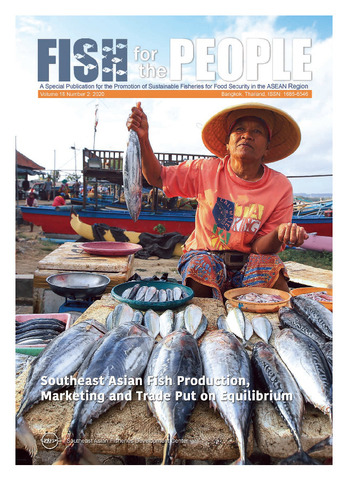
Fish for the People Vol.18 No.2
រកមើល / បើក
Downloads: 581
កាលបរិច្ឆេទ
2020Page views
1,794ទិន្នន័យមេតា
មើលកំណត់ត្រាលម្អិតនៃធាតុShare
អរូបី
During the five-year period from 2013 to 2017, the fisheries production of the Southeast Asian region posted an annual average increase of about 3.2 %. Specifically in 2017, the total fisheries production of the Southeast Asian countries was 45.5 million tonnes (t) contributing about 22.2 % to the world’s fisheries production of 205.5 t also in the same year. Such an achievement has been attained through the intensified efforts of the Southeast Asian governments to promote responsible fishing practices and sustainable management of their fishery resources, coupled with their adherence to the new paradigm of change in fisheries management that is geared towards sustainability as well as their compliance to the traceability requirements of importing countries. Assuming that the said annual rate of increase in fisheries production is modestly maintained while the sustainability of the fisheries sector is constantly supported, by 2020 the region’s fisheries production could easily reach 50.0 million t, and by 2030 about 68.5 million t.
With the region’s total population in 2017 of 655.0 million and an average per capita fish consumption of 35.2 kg/year, about 23.1 million t of fish must have been consumed by the peoples in the region in 2017. Based on UN projections that the region’s population in 2020 is 669.4 million, and in 2030 about 721.0 million, and assuming also that fish consumption remains at 35.2 kg/year, about 23.6 million t of fish must have been consumed in 2020, and about 25.4 million t by 2030.
Furthermore, also considering the FAO assumption that about 88 % of fisheries production is bound for direct consumption while the remaining 12 % is transformed into non-food purposes, this implies that about 40.0 million t must have been used for human food in 2017, and about 44.0 million t in 2020, and 60.3 million t in 2030. Such a scenario ensures that the Southeast Asian region would remain self-sufficient in fish supply in the next ten or even 20 years, affording the countries to increase their fish exports to supply the food fish requirements of the world as well as to generate returns that would fill the countries’ coffers.
A sudden turn of events however occurred starting in early 2020, disrupting the supply chain due to the stoppage and movement restrictions in fish production, marketing, and trade brought about by the onslaught of the coronavirus pandemic, creating a severe dent in the whole fish supply chain from production to consumption. While the effects of the pandemic in the fish trade are being assessed through research and the corresponding appropriate polices are being formulated to ensure that the Southeast Asian countries are coping up with the current crisis, the Southeast Asian Fisheries Development Center (SEAFDEC) continues to advocate the promotion of sustainable fisheries management, not only to arm the ASEAN Member States (AMSs) with adoptable technologies in order that their fisheries operations remain sustainable, but also to make sure that the AMSs are always on their toes and ever ready, once the fish market systems would resume their normal operations.
ប្រធានបទ

បណ្តុំបណ្តុំ
Related items
Showing items related by title, author, creator and subject.
-
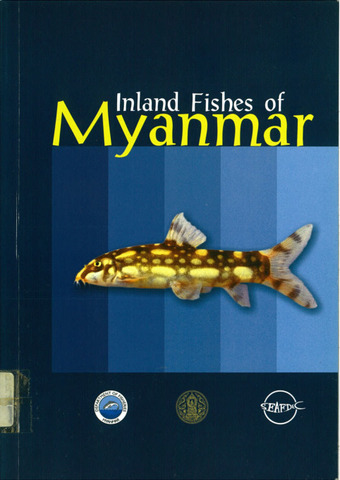
Inland fishes of Myanmar
(Secretariat, Southeast Asian Fisheries Development Center, 2005-12)This handbook of some inland fishes in Myanmar was based on a rapid field survey of SEAFDEC supported team and long term observation of the authors on common species and some taxa, obtained from the aquarium trade. We ...