Advancing Responsible Fisheries in the High Seas: Compliance of Thailand with regional fisheries management organizations

Share
นามธรรม
The high seas are important for global marine ecosystems and human food security, particularly serving as a home for fisheries resources, such as tuna and deepsea resources. However, these areas are currently facing various challenges such as overfishing, illegal, unreported, and unregulated (IUU) fishing, as well as the effects of climate change. Effective management of high seas fisheries requires regional cooperation, particularly through regional fisheries management organizations (RFMOs).
Thailand currently participates as the Contracting Party of the RFMOs, namely: the Indian Ocean Tuna Commission (IOTC) and the Southern Indian Ocean Fisheries Agreement (SIOFA), which have the right to fishing and related activities in the competence areas complying with the conservation management measures (CMMs) of both RFMOs. To meet its obligations as a state party, Thailand has systematically reformed the laws and management systems for control of overseas fisheries, such as issuing licenses for overseas fishing vessels, applying the vessel monitoring system (VMS), electronic monitoring system (EM), electronic reporting system (ERS) technology, and implementing onboard observers to control fishing activities to prevent IUU fishing and enhance transparency in the production chain.
This article analyzes the compliance of Thailand with the IOTC and SIOFA CMMs interviews with 20 officers from the Department of Fisheries, Thailand who are involved in IOTC and SIOFA using SWOT analysis and identifying the priority areas of compliance. It was found that managing abandoned, lost or otherwise discarded fishing gear (ALDFG), addressing climate change impacts, and improving fisheries data collection were the top three priority areas of compliance with IOTC and SIOFA CMMs.
To address the challenges and improve compliance capacities, the recommendations include the formulation of national policies for overseas fisheries, which are supported by targeted training and knowledge exchange programs for Thai officers to further enhance the country’s ability to comply with RFMO obligations. Strengthening these capacities will not only improve regulatory implementation but also reinforce the role of Thailand in promoting sustainable and responsible fisheries on a global stage.
เรื่อง
คอลเลกชัน
รายการที่เกี่ยวข้อง
แสดงรายการที่เกี่ยวข้องตามชื่อผู้แต่งผู้สร้างและเรื่อง
-
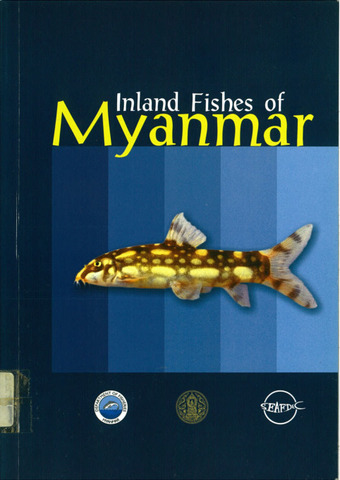
Inland fishes of Myanmar
(Secretariat, Southeast Asian Fisheries Development Center, 2005-12)This handbook of some inland fishes in Myanmar was based on a rapid field survey of SEAFDEC supported team and long term observation of the authors on common species and some taxa, obtained from the aquarium trade. We ...