04 SEAFDEC Secretariat Publications: Recent submissions
261-280 / 769
-
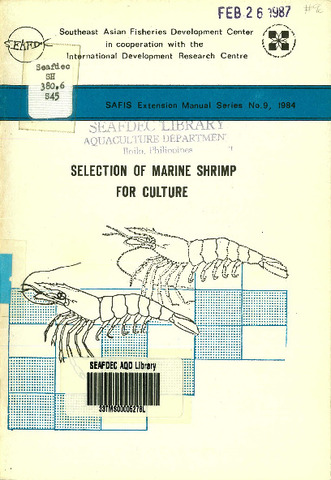
Selection of marine shrimp for culture
(Secretariat, Southeast Asian Fisheries Development Center, 1984-06)Criteria for selection of the culture species should include high economic value and high market demand, easy culture, and fast growth. The purpose of this paper is to compare the general characteristics, as well as growth ... -
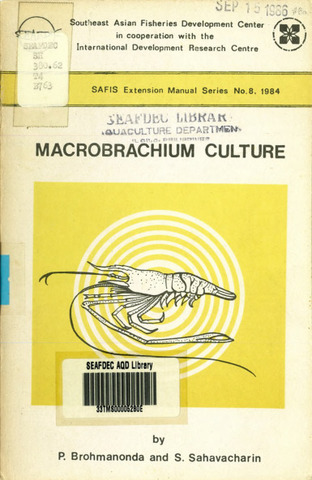
Macrobrachium culture
(Secretariat, Southeast Asian Fisheries Development Center, 1984-05)This manual is a translation of the Thai information pamphlet entitled "Karn Liang Kung Kam Kram" published by the Information and Publication Unit, Fishery Conservation and Extension Division, Department of Fisheries, ... -
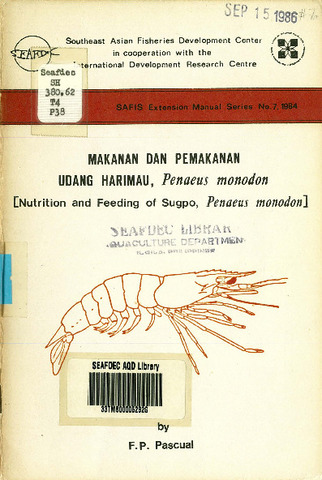
Makanan dan pemakanan udang harimau, Penaeus monodon
(Secretariat, Southeast Asian Fisheries Development Center, 1984-04)The author, Dr. F.P. Pascual, head of the Nutrition Project conducted by the SEAFDEC Aquaculture Department in the Philippines, has prepared this guide for extension purposes. The popular text concerning the nutrition and ... -
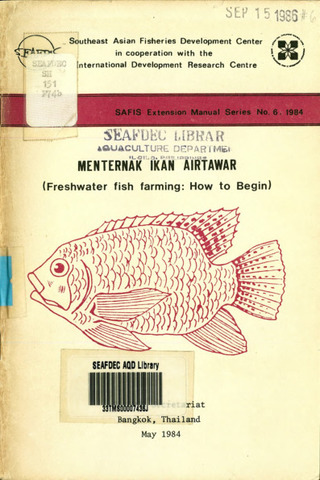
Menternak ikan airtawar: Bagaimana hendak bermula
(Secretariat, Southeast Asian Fisheries Development Center, 1984-05)The manual explains fish farming in simple language under the following headings: The pond; The water; Putting fish into your pond; Feeding your fish; Taking care of your pond; Harvesting your fish; Now you must begin ... -
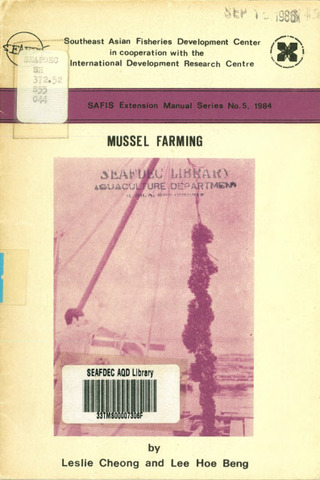
Mussel farming
(Secretariat, Southeast Asian Fisheries Development Center, 1984-01)This manual describes various aspects of mussel farming, using the raft method of culture, in Singapore. It is based on experiences gained by the Primary Production Department during its research studies and investigations ... -
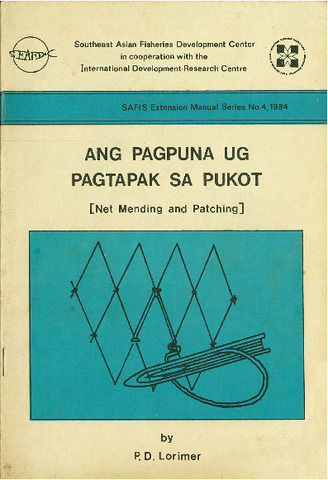
Ang pagpuna ug pagtapak sa pukot
(Secretariat, Southeast Asian Fisheries Development Center, 1984-01)The English version of "Net Mending and Patching" was prepared P. D. Lorimer when he was the Technical Adviser of the Fisheries Division, Department of Primary Industry (DPI), Canberra, Australia. It was reprinted from the ... -
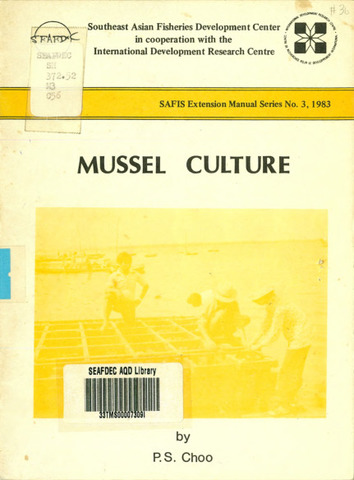
Mussel culture
(Secretariat, Southeast Asian Fisheries Development Center, 1983-06)The present text is a translation of the Malay text entitled, "Menternak Siput Sudu/ Kupang" by P.S. Choo, published by the Department of Fisheries, Ministry of Agriculture, Malaysia (Bahagian Perikanan, Risalah Perikanan ... -
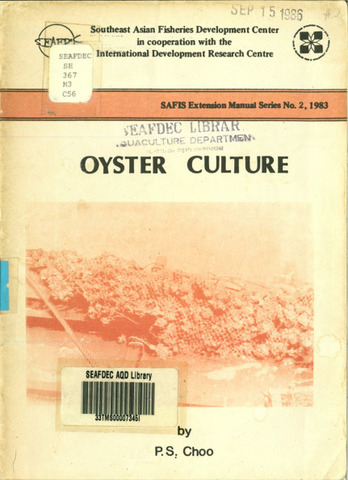
Oyster culture
(Secretariat, Southeast Asian Fisheries Development Center, 1983-05)Oysters extend over a wide geographic range, and many species are at present farmed throughout the world. These are the flat oysters belonging to the genus Ostrea or the cupshaped oysters of the genus Crassostrea. In ... -
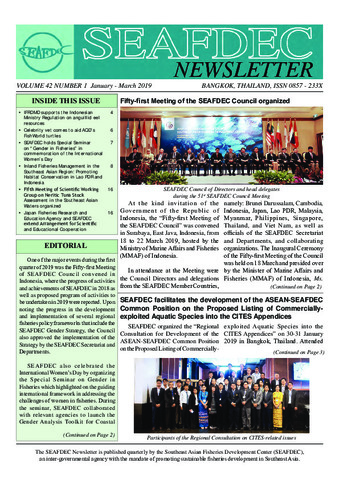
SEAFDEC Newsletter Vol.42 No.1
(Secretariat, Southeast Asian Fisheries Development Center, 2019)One of the major events during the first quarter of 2019 was the Fifty-first Meeting of SEAFDEC Council convened in Indonesia, where the progress of activities and achievements of SEAFDEC in 2018 as well as proposed program ... -
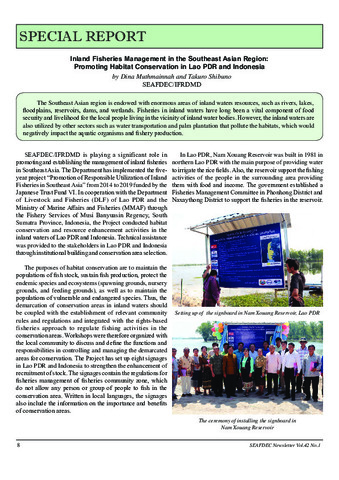
Inland Fisheries Management in the Southeast Asian Region: Promoting Habitat Conservation in Lao PDR and Indonesia
(Secretariat, Southeast Asian Fisheries Development Center, 2019)The Southeast Asian region is endowed with enormous areas of inland waters resources, such as rivers, lakes, floodplains, reservoirs, dams, and wetlands. Fisheries in inland waters have long been a vital component of food ... -
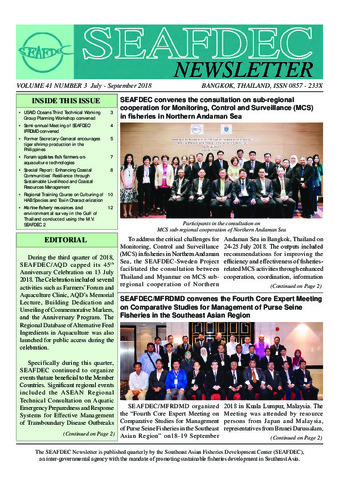
SEAFDEC Newsletter Vol.41 No.3
(Secretariat, Southeast Asian Fisheries Development Center, 2018)During the third quarter of 2018, SEAFDEC/AQD capped its 45th Anniversary Celebration on 13 July 2018. The Celebration included several activities such as Farmers’ Forum and Aquaculture Clinic, AQD’s Memorial Lecture, ... -
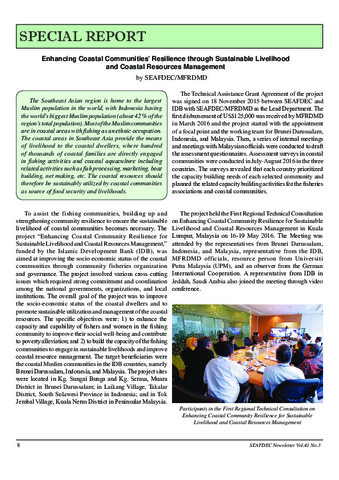
Enhancing Coastal Communities’ Resilience through Sustainable Livelihood and Coastal Resources Management
(Secretariat, Southeast Asian Fisheries Development Center, 2018)The Southeast Asian region is home to the largest Muslim population in the world, with Indonesia having the world’s biggest Muslim population (about 42 % of the region’s total population). Most of the Muslim communities ... -
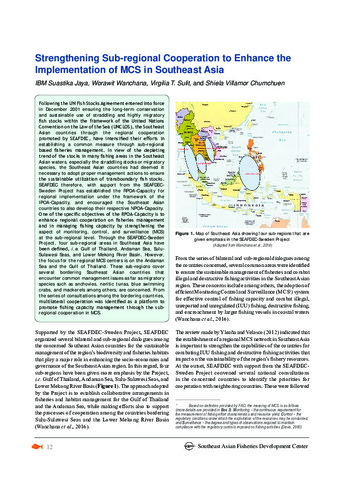
Strengthening sub-regional cooperation to enhance the implementation of MCS in Southeast Asia
(Secretariat, Southeast Asian Fisheries Development Center, 2019)Following the UN Fish Stocks Agreement entered into force in December 2001 ensuring the long-term conservation and sustainable use of straddling and highly migratory fish stocks within the framework of the United Nations ... -
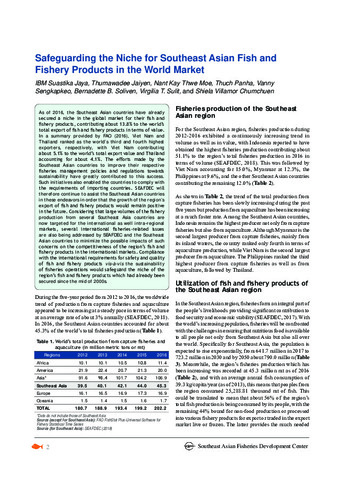
Safeguarding the niche for Southeast Asian fish and fishery products in the world market
(Secretariat, Southeast Asian Fisheries Development Center, 2019)As of 2016, the Southeast Asian countries have already secured a niche in the global market for their fish and fishery products, contributing about 13.8% to the world’s total export of fish and fishery products in terms ... -
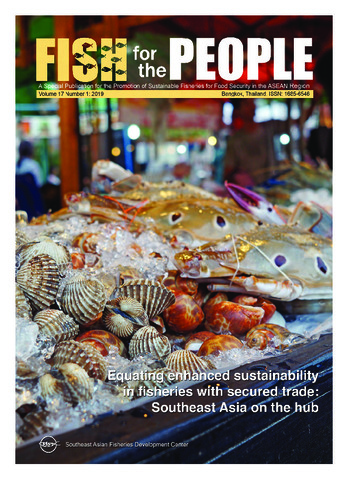
Fish for the People Vol. 17 No. 1
(Secretariat, Southeast Asian Fisheries Development Center, 2019) -
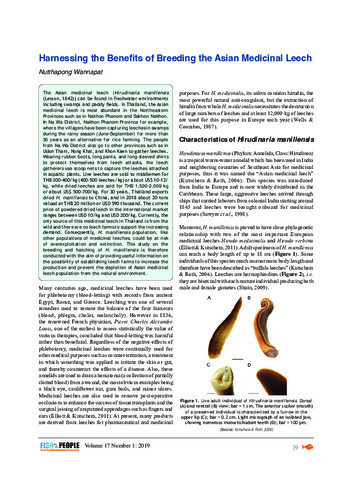
Harnessing the benefits of breeding the Asian medicinal leech
(Secretariat, Southeast Asian Fisheries Development Center, 2019)The Asian medicinal leech (Hirudinaria manillensis (Lesson, 1842)) can be found in freshwater environments including swamps and paddy fields. In Thailand, the Asian medicinal leech is most abundant in the Northeastern ... -
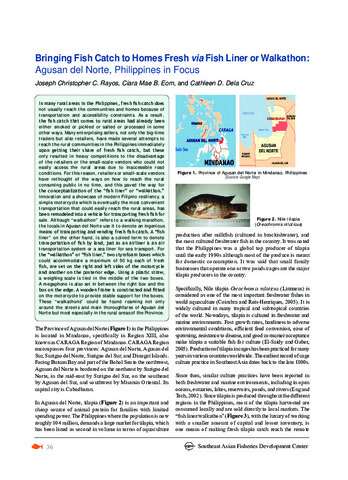
Bringing fish catch to homes fresh via fish liner or walkathon: Agusan del Norte, Philippines in focus
(Secretariat, Southeast Asian Fisheries Development Center, 2019)In many rural areas in the Philippines, fresh fish catch does not usually reach the communities and homes because of transportation and accessibility constraints. As a result, the fish catch that comes to rural areas had ... -
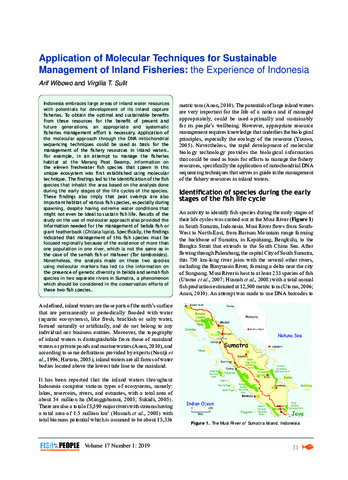
Application of molecular techniques for sustainable management of inland fisheries: The experience of Indonesia
(Secretariat, Southeast Asian Fisheries Development Center, 2019)Indonesia embraces large areas of inland water resources with potentials for development of its inland capture fisheries. To obtain the optimal and sustainable benefits from these resources for the benefit of present and ... -
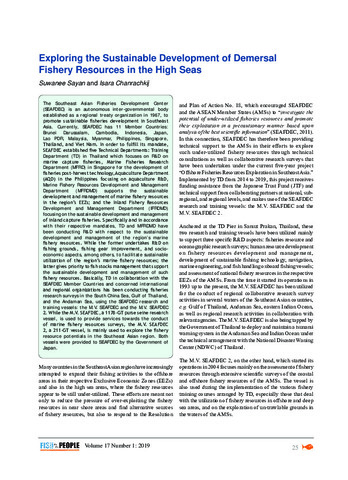
Exploring the sustainable development of demersal fishery resources in the high seas
(Secretariat, Southeast Asian Fisheries Development Center, 2019)The Southeast Asian Fisheries Development Center (SEAFDEC) is an autonomous inter-governmental body established as a regional treaty organization in 1967, to promote sustainable fisheries development in Southeast Asia. ... -
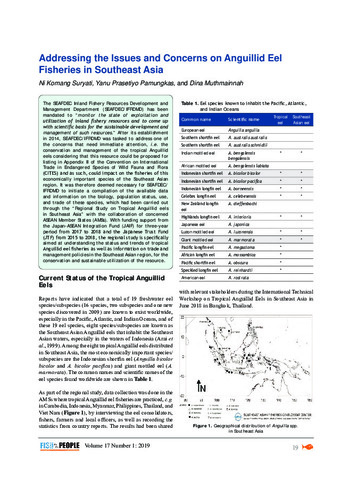
Addressing the issues and concerns on Anguillid eel fisheries in Southeast Asia
(Secretariat, Southeast Asian Fisheries Development Center, 2019)The SEAFDEC Inland Fishery Resources Development and Management Department (SEAFDEC/IFRDMD) has been mandated to “monitor the state of exploitation and utilization of inland fishery resources and to come up with scientific ...